Honey Drop 7 – “Held in the Flame”


📅 November 07 

📖 Malachi 3:3a — “He will sit as a refiner and purifier of silver…”

Bee Act 1

Refining isn’t dramatic—it’s deliberate. The silversmith doesn’t pace. He sits. He stays close. The flame does its work slowly, burning away what doesn’t belong. And the silver? It doesn’t resist. It yields. It glows. It suffers transformation in silence. But the refiner suffers too—not in destruction, but in devotion. He feels the heat that changes the silver. He stays until the shine reflects his own face.

Tension / Comfort


We often ask God to change us—but we rarely ask Him to stay with us in the fire. Malachi says He does both. He purifies, yes—but He also remains. He doesn’t abandon the process. He’s present in the pain. And He knows when to stop—not when the silver screams, but when He sees Himself in it. The fire refines the silver, but it also reveals the heart of the Refiner. The heat we feel is not a sign of distance—it’s proof of proximity.

Sweetness Drop


You didn’t rush the burn. 
You sat. 
You stayed. 
You felt the heat that changed me. 
I begged for rescue, 
but You waited for shine. 
And when You saw Yourself in me, 
You pulled me from the flame.

Call me lingophile

Once I was introduced to foreign languages I lost all other interests. French. Spanish and Latin completely took over. I had no idea that how grasping the function of languages would set my world as a believer on fire.

I loved languages because they provided a practical platform from which I could write poetry and songs about what mattered to me and my generation.  Today my hilarity is often due to running into the weird and whacky things people say they have found in the Bible.

Sometimes my hilarity is just a smile and others it is a belly laugh, and I find the most thrilling slice of hilarity when Jews and Muslims say that the language of their respective sacred books are unfathomable; are beyond the reach of outsiders.

Do you want some really good fun? Try finding out how many words Canada’s First Nations have for snow.

Honey Drop 6 – “Not Known, Still Led”


📅 November 06 
📖  “Your path led through the sea, your way through the mighty waters, though your footprints were not known.” Psalm 77:19


The background


The sea swallowed everything—noise, clarity, direction. And yet, God’s path went straight through it. Not beside it. Not above it. Through. The psalmist doesn’t say the footprints were erased. He says they were not known. Not recognized. Not found. The path was real, but invisible. The guidance was present, but untraceable.


Tension / Comfort


We want to follow what we can see. But Psalm 77 invites us to follow what we cannot know. The verb yada—to know—is negated here. It’s not just that the footprints were missing. It’s that they were unknowable. God led them through chaos, and left no trail. That’s not abandonment. That’s mystery and mystery is often the shape of mercy.


Dropping the honey


You led me through what I couldn’t name. 
The waters roared, but You remained. 
No footprints marked the way I came— 
just the ache of trust, and holy flame. 
I did not know, but I was known. 
And in the deep, You made it home.

Honey Drop 5 – “See Through the Sea”


📅 November 05 

Scene


📖 Exodus 14:13–14 — “Do not be afraid. Stand firm and you will see the deliverance the Lord will bring you today. The Egyptians you see today you will never see again. The Lord will fight for you; you need only to be still.”


There are moments when movement feels like survival—when the only thing louder than fear is the urge to fix, flee, or fight. The Israelites stood at the edge of the sea, hemmed in by water and war. Behind them, the memory of bondage galloped forward in chariots. Before them, the impossible shimmered in waves. And in that impossible place, Moses didn’t tell them to run or shout. He told them to stand still. He told them to be silent.


Unusual teamwork


Stillness and silence weren’t just spiritual disciplines—they were survival. Panic could’ve fractured the moment. If they had scattered, they would’ve scattered into death. If they had spoken, they would’ve spoken fear. But Moses made it clear: “The Lord will fight for you; you need only to be silent.” 
Silence didn’t mean neglect—it meant sacred restraint. Stillness wasn’t passivity—it was prophetic posture. The miracle didn’t come because they moved—it came because they waited. And in that hush, something holy began.

Honey Drop


Sometimes we’re lords, sometimes we’re not; 
Sometimes watching God work may be all we’ve got. 
The sea won’t part for pride or panic— 
only in the stillness that drives one manic. 
We’re in that crowd, we walk on dry land, 
where a sea had been our last stand.

Honey Drop 4: Crushed Like an Olive

From the petal to the hive—gathering sweetness from Scriptures

🌆 Where the treasure?


Jerusalem lies in ruins. The prophet sits in the rubble, surrounded by silence, smoke, and sorrow. The Temple is torched. The people are scattered. The grief is architectural—built brick by bitter brick.

“He has built against me and surrounded me with bitterness and hardship.” — Lamentations 3:5


⚖️ The Tension / Comfort
This isn’t chaos—it’s construction. The bitterness isn’t random; it’s structured. The prophet doesn’t accuse God of rage—he names Him as the builder. That’s the tension: divine discipline that feels like siege. And yet, the comfort is hidden in the structure itself. If God built it, He can also break it down.


🍯 The Drop (Sweet / Bitter)
Honey Drop: Some oil only flows when the olive is crushed. 
The bitterness is real. The grief is heavy. But the press produces purity. In the architecture of affliction, God is still present—not absent, but shaping. The sweetness? It’s in the knowing that sorrow has a source—and therefore, a limit.

Honey Drop Alert🍯

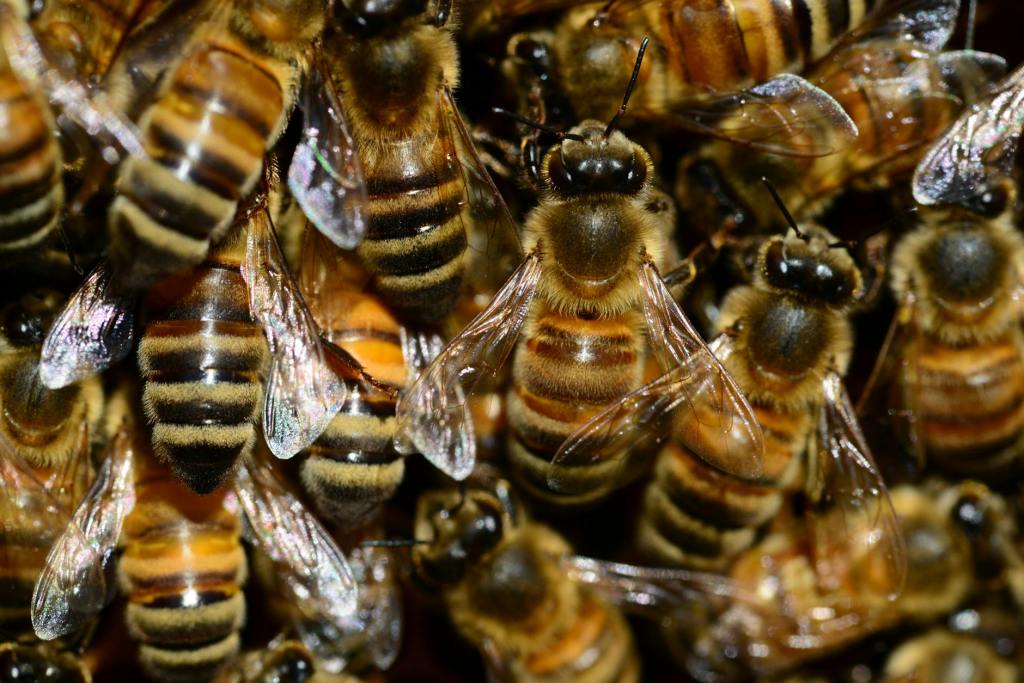
My new series – Honey Drop – started November 1. The target is   every day around 3:00 in the afternoon. I hope to show that the word of God, his message to humanity, contains as much honey as the pollen we, the busy bees, transport from the petals to the hive.

Imagine that you are a bee, and your one mission is to collect nectar and bring it to the hive.

Honey Drop 3

The Hare and the Heartset

Listen: Half-holy rabbits
Photo by Pixabay on Pexels.com


Take a Dive with Dr J 

The Hop Between the Hare and the Horizon

In the ancient world, eating a hare wasn’t casual—it was calculated. And that’s what makes this verse so rich. It’s not just about what’s forbidden. It’s about what we’re willing to pursue, prepare, and justify.

> “And the hare, because he chews the cud but does not divide the hoof, he is unclean to you.” — Leviticus 11:6


The hare chews the cud but doesn’t split the hoof. It mimics the motions but misses the mark. And in that moment—between the chew and the stride—we find ourselves. 
Are we ruminating on truth but walking without distinction? Are we hopping toward holiness or just hovering near the edge?

    Honey Drop 2

    Episode 2: I Won’t Acquit—Daniel’s NOPE to Cultural Condiments
    Take a Dive with Dr J 


    From the petal to the hive—let’s take a dive into the resolve that refuses to season conviction with compromise.

    Daniel didn’t just decline the king’s food—he refused to acquit the culture that served it. His NOPE (Natural Over Processed Elective) wasn’t passive. It was a verdict. A heartset that said: “I won’t acquit what pollutes what’s pure.”


    🧠 Theological Tension
    To acquit is to release from guilt. But Daniel didn’t release Babylon’s seasoning from scrutiny. He saw through the ritual, the richness, the processed pomp—and said NOPE. His clarity was so sharp, it cut through the condiment.

    Conviction doesn’t compromise—it convicts. 
    Daniel’s NOPE wasn’t just dietary—it was judicial. He didn’t just avoid the food. He judged the flavoring. And in doing so, he taught us that clarity isn’t just about what we consume—it’s about what we refuse to acquit.