Honey Drop 37: Mercy in the Middle

“In wrath remember mercy.” — Habakkuk 3:2

The trembling plea

The prophet has heard of God’s fame. 
He has seen the storm coming. 
He does not deny the wrath. 
He does not pretend the judgment is light. 
But he dares to ask: 
In wrath, remember mercy.

The blast – the hush


Wrath is not rage. 
It is love’s fierce defense of justice. 
Mercy is not its opposite. 
It is its fulfillment.

The prophet does not ask God to forget wrath. 
He asks Him to remember who He is.

The drop

Mercy is not the afterthought of judgment.  It is the heartbeat within it.

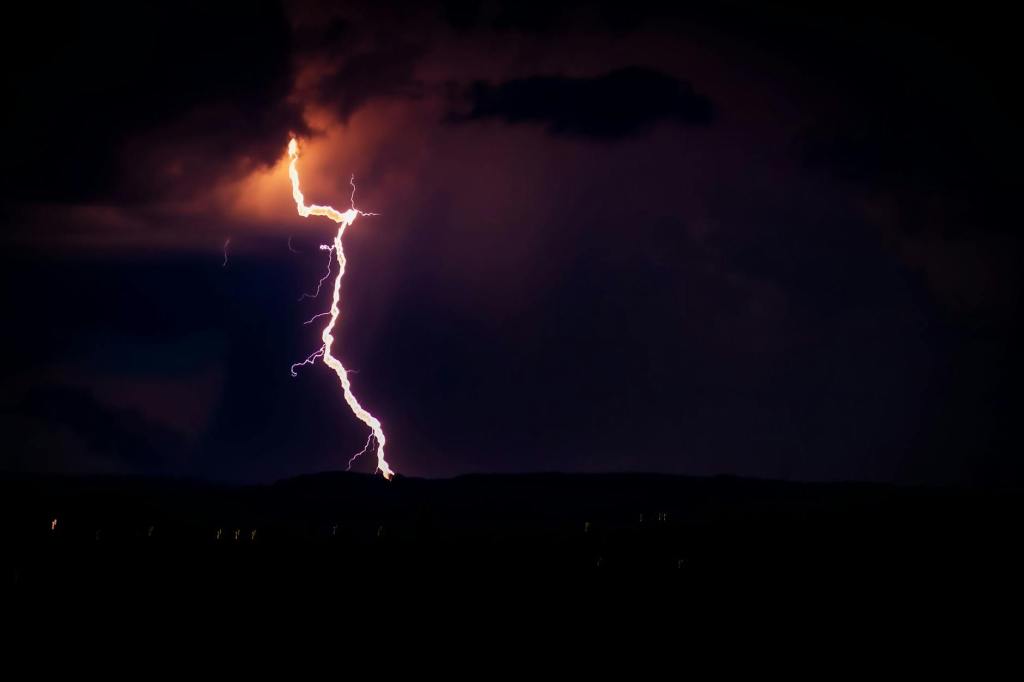
Wrath must thunder. 
But mercy is the echo that lingers.

The prophet trembles. 
But he still asks. 
Because he knows: 
God’s justice is not loveless. 
And His mercy is never late

Honey Drop 36: The Word That Turns

“Yet forty days, and Nineveh shall be overthrown.” — Jonah 3:4 

The scene is a bitter prophet and a turning city


Jonah walks one day into a three-day city. 
He speaks five Hebrew words. 
No introduction. No mention of God. No call to repent. 
Just doom.

And yet, the city turns.

From king to cattle, they fast, mourn, and cry out. 
The Judge relents. 
The city is not destroyed—but transformed.

The comfort – the tension

The hit — the miss

Jonah is furious.  

He knew this would happen.  

He quotes Exodus 34:6–7 back to God in protest:  

“I knew You are gracious and compassionate…”

Jonah wanted justice.  

God wanted mercy.  

Jonah hoped the word would crush.  

God hoped it would convert.

The drop

The Word of the Lord is never neutral. 
Even when spoken by a bitter prophet. 
Even when barely whispered. 
Even when the preacher hopes it fails.

Nineveh heard destruction and chose transformation. 
The Word turned them. 
And in Christ, the Word turns us still.

Honey Drop 35: The Fire at the Gate

So I will kindle a fire in the wall of Rabbah, and it shall devour her strongholds, with shouting on the day of battle, with a tempest in the day of the whirlwind.”  (Amos 1:14)

The scene

🧱A wall once thought impenetrable now glows with fire. The palace behind it trembles. The battle cry rises—but it is not the sound of victory. It is the sound of unraveling. And then comes the whirlwind.

🔥 Theological Pollen

Amos speaks to nations who trusted in their fortresses—Rabbah, with her walls and palaces, her armies and kings. But the Lord kindles fire not just in cities, but in systems. The wall is breached. The palace burns. The king’s cry is swallowed by the storm.

The comfort – the tension

This is not random wrath. It is measured justice. The whirlwind is consequence, not chaos. The fire is not wild—it is kindled by YHWH.

The drop

Fire is for judgment. It is also for cleansing. The whirlwind does not only scatter, it clears.  After the captivity comes the return.  After the ruin, the rebuilding. The fire at the gate is not the end, it is the beginning.

Honey Drop 34: “The Folded Napkin”

“The cloth that had been on Jesus’ head… was folded up in a place by itself.” John 20:7

Resurrection’s quiet detail

A folded napkin on a stone slab—resurrection’s whisper.
Not chaos, not haste. A deliberate act. A sign for the beloved disciple.

The hit – the miss

How many things do we leave folded neatly behind? What signs of life do we miss?

The drop

The risen One leaves not just an empty tomb, but a message in linen.

Honey Drop 33: “The Fish That Swallowed the Prophet”

“And the Lord appointed a great fish to swallow up Jonah.” — Jonah 1:17

Mercy in the belly of judgment

The prophet finds himself in the dark, wet cathedral of the fish’s belly; an unlikely sanctuary.

Jonah’s descent was not for punishment or correction alone, but for his preservation.  The Great Fish; not a monster, but a mercy.

The comfort – the tension

The fish becomes a midwife, not an executioner. The prophet is almost reborn through lament.  He is confined but free to preach again, even though his heart is still distant from God.

The drop

Sing this psalm as the fish rises from the deep, and let it ricochet off the ribs of grace.

Honey Drop 32: “The Silence Between the Notes”

 “There was silence in heaven for about half an hour.” — Revelation 8:1

The structure of heaven’s silence

The hush before the downbeat, the held breath before the trumpet is Silence, not as absence, but as reverence. The pause in heaven is divine punctuation!

Greek: σιγή (sigē) is silence, stillness; used twice in the NT, marks awe or judgment.  We know, our turn comes to face the silences of life: grief, waiting, and reverence.  These are not voids but vessels.
A musician’s rest and readiness to pluck a string, to construct a Selah as in the psalms, a womb where sound gestates.

“This is not the silence of indecision—it is the hush of divine resolve. The courtroom has fallen still. Judgment, κρίσις, krisis—the weighing of hearts—is complete. κρίμα, krima—the sentence—is about to begin. It is as if YHWH leans forward and whispers, “Hush now.”

Silence in Scripture is never empty. It is the fullness of meaning too weighty for words. In Revelation 8:1, heaven falls silent—not from confusion, but from awe. The Lamb has opened the final seal. The scroll is no longer sealed. Nothing more needs to be said.

The comfort – the tension

And we remember another silence: 

“He was oppressed, and he was afflicted, yet he opened not his mouth…” — Isaiah 53:7

Yeshua stood silent before Pilate, not in weakness, but in sovereignty. The Word made flesh chose not to speak, because the truth was already standing in the room. The Lamb was judged in silence so He could judge in righteousness.

The drop

Sometimes, the Spirit says, “Be still,” not to hush us, but to heal us. Sometimes, in the face of accusation or sorrow, the Sovereign invites us into the silence of the Lamb—not to be voiceless, but to be anchored. To say with our stillness: “Nothing more needs to be said. The truth stands.”

Honey Drop 31: The Table Between Us

“You prepare a table before me in the presence of my enemies …” 

Psalm 23:5

The scene

Two people sit across from each other. The air is thick with memory—some tender, some torn. The table between them is not just furniture; it is a field. A place where silence can speak, and bread can bear witness. This Drop explores the sacred tension of shared presence when reconciliation is still unfolding.

The tension – the comfort

The table is not a resolution—it is a risk. To sit across from someone who has wounded you, or whom you’ve wounded, is to enter a space where words may fail and presence must carry the weight.
But the table is not ours to prepare. It is set by a Host who knows every ache. The bread is not a bribe—it is a balm. And in the breaking, something begins to mend.

Sidebar

🍽️ Shulḥan as a Hub of Generosity. 
In Hebrew, שֻׁלְחָן (shulḥan) means more than table—it is a hub of generosity. In ancient Israel, the table was a place of covenantal hospitality, justice, and divine provision. It echoed the altar, where bread was not hoarded but offered.

– The shulḥan is where hunger meets holiness. 
– It is not a shelf—it is a sending place. 
– To feed another is to participate in God’s generosity.

The drop

Not peace without pain, 
But bread with memory 
And wine with ache. 

The table does not erase the wound
It names it, 
And feeds us anyway. 
 
Between us: 
Not silence, 
But a setting. 
 
And in the breaking, 
We begin to see.