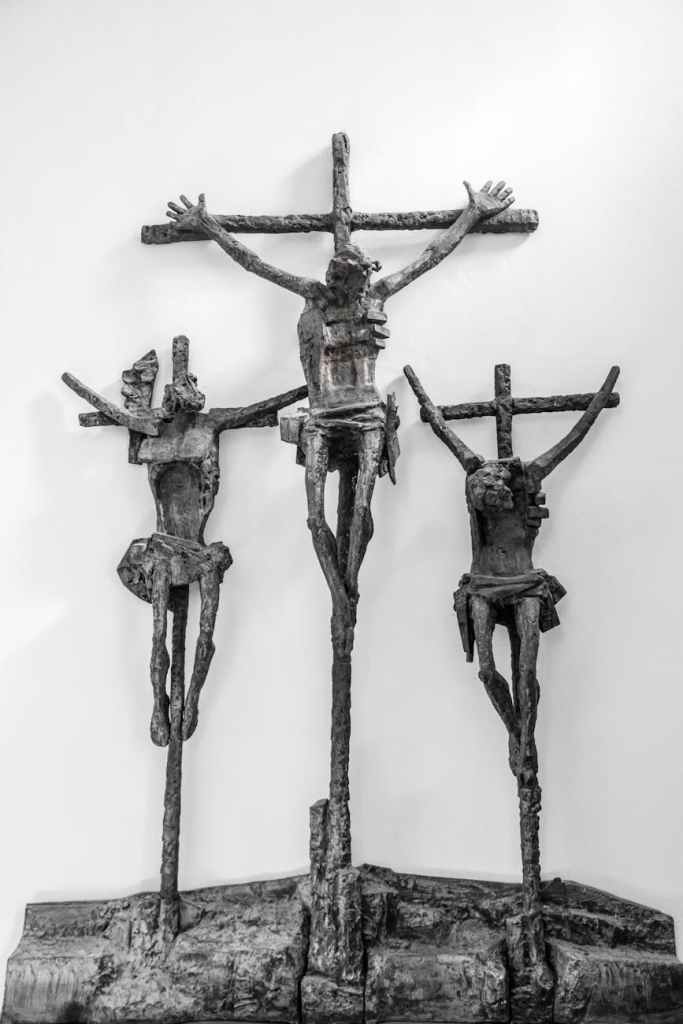
Honey Drop 59 – Faith Finds its Footing

“Who among you fears the LORD and obeys the voice of His servant? Let the one who walks in darkness and has no light trust in the name of the LORD and rely on his God.” Isaiah 50:10

The scene

A voice rises in the assembly — not scolding, but searching. “Who among you…?” Not because Jah is unsure, but because Jah wants the one who trembles, the one who listens, the one who trusts in the dark, to know he is seen. A lone figure steps forward in the shadows — not with confidence, but with honesty. And Jah nods, as if to say, “I know you. I knew you were here.”

Lexical Brief

  • יִבְטַח (yivtach) — to trust, to lean your full weight.
  • יִשָּׁעֵן (yisha’en) — to rely, to be supported, to rest on a sure strength.
  • שׁוֹמֵר (shōmēr) — the Keeper, the One whose ongoing action is to guard, attend, preserve.

The Tension & The Comfort

The Tension: You walk without light, uncertain of the next stone, unsure if your fear disqualifies you.

The Comfort: But the question is the comfort — Jah calls out because He already sees you. And the Keeper who knows your name keeps your way.

The HONEY DROP (the Nectar)

Jah asks “Who?” not to expose you, but to name you. The one who fears, obeys, trusts, and leans — Jah knows that guy exists. And the Shōmēr keeps him still.

May the One who asks “Who among you?” remind you that He already knows. May your trust find its footing, your leaning find its strength, and your darkness find a Keeper who never sleeps.

Poetic Flash: Your trembling step is already recognized in heaven.

Honey Drop 58 — Shalom, Shalom

“You will keep in perfect peace those whose minds are stayed on You, because they trust in You.” Isaiah 26:3

The scene

When storms begin to gather and my thoughts start running wild, You steady all my thinking like a parent calms a child. You hold my restless mind in a peace that flows like sea — shalom upon shalom, poured gently over me.

The shaking- the shalom

My mind leans hard on You when the world begins to shake. You keep me in a wholeness that no trouble ever breaks. Your care becomes the shelter where my inner fears agree that shalom upon shalom is where my trust will be.

You shape my inward frame when the pressure starts to rise. You quiet all the noise with a calm that never lies. Your presence is the keeper of the thoughts that bend the knee — shalom upon shalom, the peace that carries me.

Lexical Note Shalom shalom means wholeness in full degree; yetzer is the mind You shape intentionally; samakh is the leaning that trusts Your constancy — shalom upon shalom, the peace You give to me.

The drop

The Drop When my mind leans on You, You keep it whole and free. Shalom upon shalom — Your perfect peace in me.

Poetic Flash :Your doubled peace becomes my steadying decree — shalom upon shalom, the calm that keeps my sea.

Honey Drop 57 — You, My Light

“The Lord is my light and my salvation; whom shall I fear?” Psalm 27:1

The scene

When shadows gather close and the night begins to rise, You kindle up my path and put brightness in my eyes. Your warmth upon my skin makes the darkness turn and flee — someone else can be afraid, but not me.

The shadow- the light

You show me every danger that would hide along the way. You steady all my footsteps so my feet don’t go astray. Your fire in the night is the shield that covers me — someone else can be afraid, but not me.

You lift me from the traps that were tightening unseen. You stand as my stronghold where the fearful cannot lean. Your presence is the fortress where my heart walks bold and free — someone else can be afraid, but not me.

Lexical Note: Light means sight and warmth and steps that walk free; salvation means rescue with sure victory; stronghold means safety no threat can decree — someone else can be afraid, but not me.

The drop

When You are my light, fear has nowhere left to be. Someone else can be afraid — but not me.

Poetic Flash: Your light on my path is my bold guarantee — someone else can be afraid, but not me.

Honey Drop 56 — Into the Broad Place

“He brought me out into a broad place; He rescued me, because He delighted in me.” Psalm 18:19

The scene

A man steps out of a cave where he has hidden too long — hunted by enemies outside and betrayed by a leader inside his own house. The air behind him is tight with fear and narrow escapes. Then he emerges into open ground. The sky widens. His chest loosens. For the first time in years, he can breathe without listening for footsteps.

The comfort – the tension

The psalmist names salvation as spaciousness. God brings him into a merchav — a broad place — because rescue is not complete until the body knows it is safe. And this is not only personal. Israel knew what it was to be squeezed by foreign powers and failed by its own kings. Many communities still know that story: pressed by former colonials, disappointed by present leadership, living in a narrowness not of their own making. Yet the verse insists that God’s delight is stronger than any constriction. The broad place is the sign that deliverance is real — for the individual and for the people.

Lexical Note: merchav means open space, wide ground, room to breathe. It is salvation experienced as spaciousness. Rescue is the action; delight is the motive; the broad place is the proof.

The drop

When God delights in you, He brings you into room — not just for your breath, but for your people’s future.

Poetic Flash: He frees your chest so your people can breathe again.

Honey Drop 55 — The Path That Brightens

“But the path of the righteous is like the light of dawn, shining brighter and brighter until full day.” Proverbs 4:18

The scene

A traveler steps onto a narrow footpath carved by generations of steady feet. The first light of dawn brushes the stones, revealing just enough to keep moving. Behind him, a wide, unmarked road fades into shadow — a route that leads somewhere, though no one can say where. Ahead, the path brightens with every step.

Bright and brighter

The sage chooses his nouns with precision: the righteous walk an ’orach — a cultivated path, shaped by intention, discipline, and repeated steps. It brightens because it has been formed to receive light. But just beyond this verse lies the derekh of the wicked — a road without shape, a direction taken by drift rather than choice. One path grows clearer; the other grows darker. The comfort is this: every step you take on the crafted path invites more dawn.

Lexical Note Proverbs contrasts orach (a cultivated, intentional path) with derekh (a general road or direction). The righteous walk a path formed by wisdom; the wicked drift down a road formed by neglect.

The drop

Walk the path you shape, and the light will shape you.

Poetic Flash Choose the path that meets the dawn, and the dawn will meet your steps.

No confusion here: gospel saves

You may have noticed that the Bible itself describes the gospel in over a dozen ways, including the simple adjective “different”. If you are unaware of the wide range of gospel properties you may be in considerable danger of being led down the garden path instead of heading for a mountaintop experience when you read your Bible. The Bible has been reliably translated into the everyday languages of  thousands of earth’s inhabitants. The main confusion arises from Islamic competition: placing the main attraction, the Word of God, in the category of prophets. I would not be able to say that had I not surveyed every reference to the word gospel. 

What prophet?

Yeshua of Nazareth is not a guy who escaped crucifixion. He was not married and swept up in polygamy and the fables of his people. He was the One who said I came to give life to all. This means all are dead. Do not even try to ask a Muslim or a Jew about this topic unless you are willing to ignore all that the prophets have said about David’s house, David’s descendant, and David’s dynasty. If you want to ignore what the Lord said about the solution to human rebellion, then go right ahead, listen to the windy prophets. In one sense or another, they’re all thieves and robbers, who had the distinct honour of speaking for the divine Majesty for a brief moment in their own time, and with lasting effect as corroborating witnesses to the people living in the last days. There is no confusion about the light brought by Yeshua to Jewish life, and its finality is established by the uprooting of people and the demolition of the temple. The prophet that fails to call out his people’s pagan and corrupt practices is no prophet of the divine Majesty.

Has this house, which is called by my name, become a den of robbers in your eyes? Behold, I myself have seen it, declares the LORD. (Jer 7:11 ESV2011)

These words on the lips of the Word of God – taken directly from the ancient prophet are abundantly clear. They need no commentary to clarify their meaning.

He said to them, “It is written, ‘My house shall be called a house of prayer,’ but you make it a den of robbers.” (Matt 21:13 [SV2011)

It takes more than a prophet to dispel the darkness into which humans were plunged when they were first seduced into flirting with a phony divinity. What prophet will people invent that can outshine John the Baptist? People who want to be called prophet will flee when they learn of the devotion of John to his Master. People who want to call up a prophet to massage their tribal vanities will pull a 180 when they figure out that prophets typically die like bits of rubbish, given over to the powers of darkness. John died as a gift to a dancing girl who asked for his head. Prophets who died in their cushy residences, enjoying the comforts of this life, surrounded by adoring fans are nothing at all. Call Yeshua a prophet and say he is nothing more, will they?

The phrase that tripped up the antichrist: Word of God

and every spirit that does not confess Jesus is not from God. This is the spirit of the antichrist, which you heard was coming and now is in the world already. (1John 4:3 ESV2011)

The [w]ord of God did not merely come to the ancients. The phrase identifies more than words and meaning; the phrase describes an encounter with God. The word happened to the prophets (Genesis 15:1, 2 Samuel 7:4, 2 Samuel 24:11, Isaiah 38:4, Jeremiah 1:4, Ezekiel 1:3, Hosea 1:1, Zechariah 1:1)

For many deceivers have gone out into the world, those who do not confess the coming of Jesus Christ in the flesh. Such a one is the deceiver and the antichrist. (2John 1:7 ESV2011)

One Muslim was heard affirming – and I think they all say this – that “Allah sent down his word”, and followed that with “Allah’s word did not exist before he was sent down. When Christ was here in Palestine his contemporaries said “A man cannot be God”, but their own Bible said that God called their ancestors “gods”.

Who is the liar but he who denies that Jesus is the Christ? This is the antichrist, he who denies the Father and the Son. (1John 2:22 ESV2011)

Deny Deny. That is what dead people do until they are quickened.

Yeshua is God’s Word – and let us not get bogged down in speculations about spoken, written and unuttered words. Not one prophet has saved people from their homicidal and covetous penchant. So let us hear it for the Word that came to save. What is a Word from God if he not born without the usual human contribution? What is a Word from God when he does not give sight to the blind? What is a Word from God if he does not elevate the downtrodden and liberate captive women? Should our children never become adults authorized to make a decision about whom they worship? Or should we just shove our religious tradition and culture down their throats? Please, do not ask a Muslim or a Jew!

Most people want parents, politician, priests, rabbis, gurus, imams and shamans who can free them from the useless round of ritual and sensual bondage. No Word from God means hope of salvation. A word from God that is merely a prophet is not news; not good news, not bad news. A word that keeps cultural conventions alive is not salvation. Some people can be fooled sometimes, but lots of us have escaped the corruption that passes for religion. We have a gospel that saves us by the renewal of our minds, helps us with a dramatic change of mind, and it is not something that I care to explain. I dare you to try it

 Honey Drop 54 — From Thirst to Flow

“The Lord will guide you continually, satisfy your soul in parched places, strengthen your bones; you shall be like a watered garden, like a spring whose waters do not fail.” Isaiah 58:11

The scene

A traveler crosses a cracked plain, the earth split like old pottery. His throat tightens with thirst, his steps slow under the weight of heat. Then, in the distance, a patch of green interrupts the monotony — a tended garden, alive against all odds. Beyond it, the sound of water rising from a hidden spring.

The comfort – the tension

The verse moves through the human condition with the honesty of a desert map: a soul that hungers, parched places that drain, bones that weaken. But God answers each noun with a transformation: the soul is fed, the parched place becomes bearable, the bones regain strength. And the movement doesn’t stop there — you become a garden tended by His care, then a spring whose waters do not fail. What begins in thirst ends in flow.

Lexical Note: The nouns form a progression: soul → parched places → bones → garden → spring — a movement from inner need to outward flourishing, from scarcity to self-renewing abundance.


FLASH! He feeds your soul, firms your bones, and makes your life water someone else’s drought.

The drop

God meets your hunger, strengthens your frame, and turns your dryness into a source.


 Honey Drop 53 — Kept, Then Covered

“The Lord is your keeper; the Lord is your shade at your right hand.” Psalm 121:5

The scene

A pilgrim walks the long ascent toward Jerusalem, the sun hammering the back of his neck. The road winds upward with no shelter in sight. Every stone reflects heat, every breath tastes of dust. Then, as he crests a ridge, a lone terebinth tree spreads its branches — a sudden, unexpected refuge. He steps beneath it, and the world cools.

The comfort – the tension

Life exposes us — to heat, to glare, to forces stronger than our strength. We can shield ourselves only so long. But the verse moves with a promise: first a Keeper who acts, then a Shade who becomes. God’s protection is not only an event; it is a condition. Not only something God does — something God is. And in that shift, the heat that once drained you becomes a place where His presence cools you.

Lexical Note The shift from the participle shomer (“keeping”) to the substantive tsel (“shade”) marks the movement from divine action to divine atmosphere; from what God does to what God becomes around you.

Poetic Flash: His keeping meets you on the road; His shade becomes the road around you.

The drop

You are guarded by His vigilance and cooled by His presence. Kept, then covered.