Honey Drop 56 — Into the Broad Place

“He brought me out into a broad place; He rescued me, because He delighted in me.” Psalm 18:19

The scene

A man steps out of a cave where he has hidden too long — hunted by enemies outside and betrayed by a leader inside his own house. The air behind him is tight with fear and narrow escapes. Then he emerges into open ground. The sky widens. His chest loosens. For the first time in years, he can breathe without listening for footsteps.

The comfort – the tension

The psalmist names salvation as spaciousness. God brings him into a merchav — a broad place — because rescue is not complete until the body knows it is safe. And this is not only personal. Israel knew what it was to be squeezed by foreign powers and failed by its own kings. Many communities still know that story: pressed by former colonials, disappointed by present leadership, living in a narrowness not of their own making. Yet the verse insists that God’s delight is stronger than any constriction. The broad place is the sign that deliverance is real — for the individual and for the people.

Lexical Note: merchav means open space, wide ground, room to breathe. It is salvation experienced as spaciousness. Rescue is the action; delight is the motive; the broad place is the proof.

The drop

When God delights in you, He brings you into room — not just for your breath, but for your people’s future.

Poetic Flash: He frees your chest so your people can breathe again.

Honey Drop 55 — The Path That Brightens

“But the path of the righteous is like the light of dawn, shining brighter and brighter until full day.” Proverbs 4:18

The scene

A traveler steps onto a narrow footpath carved by generations of steady feet. The first light of dawn brushes the stones, revealing just enough to keep moving. Behind him, a wide, unmarked road fades into shadow — a route that leads somewhere, though no one can say where. Ahead, the path brightens with every step.

Bright and brighter

The sage chooses his nouns with precision: the righteous walk an ’orach — a cultivated path, shaped by intention, discipline, and repeated steps. It brightens because it has been formed to receive light. But just beyond this verse lies the derekh of the wicked — a road without shape, a direction taken by drift rather than choice. One path grows clearer; the other grows darker. The comfort is this: every step you take on the crafted path invites more dawn.

Lexical Note Proverbs contrasts orach (a cultivated, intentional path) with derekh (a general road or direction). The righteous walk a path formed by wisdom; the wicked drift down a road formed by neglect.

The drop

Walk the path you shape, and the light will shape you.

Poetic Flash Choose the path that meets the dawn, and the dawn will meet your steps.

 Honey Drop 54 — From Thirst to Flow

“The Lord will guide you continually, satisfy your soul in parched places, strengthen your bones; you shall be like a watered garden, like a spring whose waters do not fail.” Isaiah 58:11

The scene

A traveler crosses a cracked plain, the earth split like old pottery. His throat tightens with thirst, his steps slow under the weight of heat. Then, in the distance, a patch of green interrupts the monotony — a tended garden, alive against all odds. Beyond it, the sound of water rising from a hidden spring.

The comfort – the tension

The verse moves through the human condition with the honesty of a desert map: a soul that hungers, parched places that drain, bones that weaken. But God answers each noun with a transformation: the soul is fed, the parched place becomes bearable, the bones regain strength. And the movement doesn’t stop there — you become a garden tended by His care, then a spring whose waters do not fail. What begins in thirst ends in flow.

Lexical Note: The nouns form a progression: soul → parched places → bones → garden → spring — a movement from inner need to outward flourishing, from scarcity to self-renewing abundance.


FLASH! He feeds your soul, firms your bones, and makes your life water someone else’s drought.

The drop

God meets your hunger, strengthens your frame, and turns your dryness into a source.


 Honey Drop 53 — Kept, Then Covered

“The Lord is your keeper; the Lord is your shade at your right hand.” Psalm 121:5

The scene

A pilgrim walks the long ascent toward Jerusalem, the sun hammering the back of his neck. The road winds upward with no shelter in sight. Every stone reflects heat, every breath tastes of dust. Then, as he crests a ridge, a lone terebinth tree spreads its branches — a sudden, unexpected refuge. He steps beneath it, and the world cools.

The comfort – the tension

Life exposes us — to heat, to glare, to forces stronger than our strength. We can shield ourselves only so long. But the verse moves with a promise: first a Keeper who acts, then a Shade who becomes. God’s protection is not only an event; it is a condition. Not only something God does — something God is. And in that shift, the heat that once drained you becomes a place where His presence cools you.

Lexical Note The shift from the participle shomer (“keeping”) to the substantive tsel (“shade”) marks the movement from divine action to divine atmosphere; from what God does to what God becomes around you.

Poetic Flash: His keeping meets you on the road; His shade becomes the road around you.

The drop

You are guarded by His vigilance and cooled by His presence. Kept, then covered.

 Honey Drop 52 — The Eye That Knows the Way

“I will instruct you and teach you in the way you should go; let me guide, my eye’s on you.” Psalm 32:8

honey in the petals

The scene

A young disciple sits beneath an acacia tree, tracing lines in the dust. The path ahead is blurred by heat, the horizon wavering like a question. He squints, trying to read the land, but the world offers only fragments; a broken trail here, a faint footprint there. Then a presence settles beside him, not loud, not forceful, but steady as shade in the noonday sun.

Eyes left – eyes right – eyes 360

We strain to see what lies ahead, but our vision is always partial — angles, guesses, shadows. Yet the One who speaks does not guess. He guides with intention — a cohortative resolve — and His eye fills the gaps our eyes cannot. Where we see pieces, He sees the whole. Where we see risk, He sees purpose. Where we see only the next step, He sees the road’s end and its meaning.

Lexical Note: The verb counsel carries the cohortative force — not merely “I will counsel you,” but “Let me counsel you; I am committed to this.” And the phrase “my eye upon you” signals protective attention, the kind of guidance given not from a distance but from a presence close enough to see what you cannot.

Our partial sight is safe in His perfect seeing.

The drop

You do not walk by your sight alone. You walk by the gaze that never loses you.

 Honey Drop 51 — The Voice at Your Back

“And your ears shall hear a word behind you, saying, ‘This is the way; walk in it.’” Isaiah 30:21

The scene

A traveler moves along a dusty path, the kind carved by generations of feet and hope. The sun is high, the air shimmering with heat. At a crossroads with no signposts, he pauses. The land is quiet — too quiet — until a whisper rises behind him, soft as a hand on the shoulder.

The certain – the unclear

There is the uncertainty of standing between paths, the fear of choosing wrong, the ache of silence when guidance feels overdue. Yet there is also the promise that God’s direction is not lost in the wind. He guides in intense privacy, resulting in ultimate confidence — the voice does not shout from the distance; it leans close enough to breathe clarity into confusion.

Lexical Note: The phrase “a word behind you” carries the sense of a voice that follows, not to chase but to steady. The speaker has been where you are. Also, the Hebrew verb for “walk” (לֵךְ, lekh) is imperative — not a suggestion but a commissioning. God doesn’t merely point; God sends.

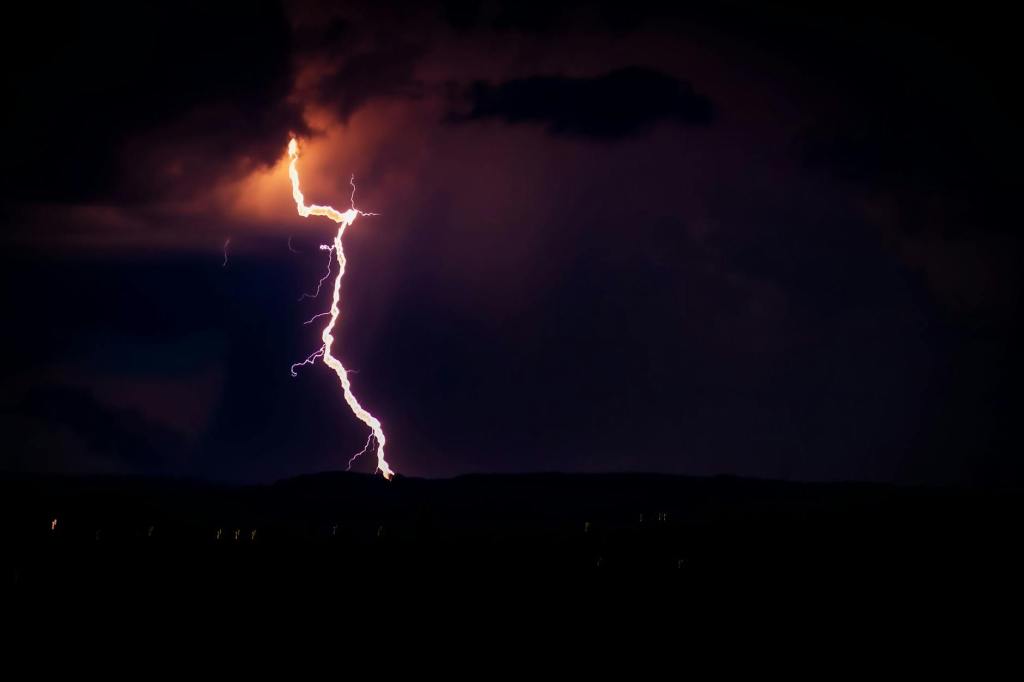
lightning flash

The drop

When you cannot see the way forward, listen behind you. God’s guidance often arrives like memory. gentle, persistent, and unmistakably near.

Honey Drop #50 — The Lamp You Stir Awake

Psalm 18:28“You light my lamp; the Lord my God illumines my darkness.”

The scene

A lone traveler sits at the edge of dusk. The day’s heat is fading, and shadows stretch long across the red earth. A small clay lamp rests beside him — wick trimmed, oil ready, but unlit. He waits, not for the flame he can strike, but for the One who kindles from within.

The ache – the ahh

There is the ache of not seeing the next step, the quiet fear that the night might swallow the path. But there is also the steady truth: the darkness is not sovereign, and the lamp is not abandoned. The One who formed light from nothing still leans close.

Lexical Note יַגִּיהַּ
(yaggiha) suggests causing to gleam — God draws out radiance rather than replacing it. And נֵרִי
(neri, “my lamp”) is intimate: not a temple lamp, but the small personal flame of a traveler. God attends to the little light you carry.

The drop – you shine it

When your strength flickers, God does not hand you a match — God becomes the spark. Your lamp shines because You make it shine.

Flash of Lightning: A lamp in Your hands becomes a sunrise in mine.

Honey Drop 49: The Power in the Hollow

“My grace is sufficient for you, for My power is made perfect in weakness.” — 2 Corinthians 12:9

The paradox Paul embraced

He asked for the thorn to leave. 
Three times. 
He was met with a no— 
and a greater yes.

Not relief. 
But rest. 
Not escape. 
But indwelling.

The weak – the powerful

Weakness is not patched. 
It is filled. 
It is not the flaw in the design. 
It is the dwelling place of power.

Christ does not hover above the ache. 
He rests upon it. 
He makes His home 
in the hollow.

The drop

Grace is not a crutch. 
It is the structure.

Power is not proven by strength. 
It is perfected in surrender.

And the boast is not in what we bear,  but in who bears us.

The thorn stayed. 
But so did Christ. 
And the hollow became holy.