Why did the heathen rage

The heathen who raged were bigoted and rebellious. They rage with jealousy and they rage against the king, not the people. They seem to like being exposed to divine anger. Israel is a nation (goy, yog) above all others.1 There is only one kingdom of priests: Israel. Neither the Hebrew nation nor the nations are ignorant of God’s priorities. Germany, the UK or the US are never going to be the greatest or highest nation on the planet. That designation was reserved for the descendants of Abraham and is now exclusively for those who kiss the Son, the king on the hill. The nations conspire because they do not know what God is going to do, and even God’s prophets are often in the dark, even though he promises to give his prophets a heads up (Amos 3:7). Let the heathen rage, because they can, and they must, so that the happiness of those who take refuge the Lord’s Son may stand in contrast with the perishing as long as they remain exposed, separate from the king.

The day Yeshua could not hide

This business about the king on the hill is not as private as we have thought. Magi came to worship while the people had their heads in the sand, or more precisely, their noses glued to the scent of Roman power, instead of the power of God’s written word.

And from there he arose and went away to the region of Tyre and Sidon. And he entered a house and did not want anyone to know, yet he could not be hidden. Mark. 7:24

The interactions God had with the neighbours of Israel are eyeopening. They make the case that when both repeated exile and restoration, the ups and the downs always have been in the care and company of heathen nations and peoples that takes the sail out of the us them of the Mosaic tradition. One can refuse to eat with Gentiles or even to enter a Gentile home, but we are standing against that conspiracy to ignore the facts, namely that God in ancient times sent top level ambassadors to people other than Israelites.2 There is even a God-directed partnership with Syria and Israel on one side and Judah on the other (2 Kings 15:37).

God’s checklist – from Abraham to David

It is as if there is a checklist of events Yeshua to use to drive home the emptiness of the wall of partition between Israelites and the heathen. Syria, Lebanon, alien lepers, widows, all receiving law defying attention from heaven’s ambassadors is a testimony that cannot be hidden. The same players are on the agenda. He goes to them, he touches them, he stays with them.

We cannot forget that Abraham’s descendants are not themselves the king, and David’s house, in which were combined both mediation and kingdom, was the repository of all things that make happiness and lasting security possible. David’s house was going to buck the trend in order to make a clear distinction between the king on one side and the heathen and the rulers on the other. Some things we have to just say amen to. When it comes to being not Israel the Ninevites probably take the cake. But any nation will do to help us illustrate that the heathen/Gentile Jew split has had its day.

How to love the nations

The ancient pattern of showing how much he cared for the heathen was going to have a witness doubles in modern times. This is what plays out in Yeshua’s visit to Tyre and Sidon. It is a deliberate fellowship with the heathen that also came to life in the Book of Acts. Him wanting to keep it secret is not to hide the momentous event(s) but to avoid unnecessary publicity, which we have seen him do. The interests of David’s house was going to excel by connected with both global inclusion and atonement through the king on the hill. Even with John the baptist preaching in a desert the upset could not remain unwitnessed.

The God in touch with everyone

God does not stand afar off. He sends prophetic delegation to a military officer in Syria who suffers with leprosy, to a widow in Lebanon, to the Syro-phoenician woman whose daughter was demonized, to the centurion whose faith was not found in Israel, to a uncircumcised centurion Cornelius.

And behold, a leper came to him and knelt before him, saying, “Lord, if you will, you can make me clean.” Matt. 8:2 And Jesus stretched out his hand and touched him, saying, “I will; be clean.” And immediately his leprosy was cleansed. Matt. 8:3 And Jesus said to him, “See that you say nothing to anyone, but go, show yourself to the priest and offer the gift that Moses commanded, for a proof to them.” Matt. 8:4

A city set on a hill cannot be hidden. Do not even try. The king of that city has a shiny new title: king of the nations.

1 The ESV soft pedals segullah mikol haummim, a manifest comparison and distinction, not “among”. Compare Gen. 3:1, Exo.. 33:16, Deu. 7:6, 1 Kings 4:31, Jer. 17:9

2 Israelite king to Syrian King (1 Kings 15:18), Syrian king to Israelite king (2 King 5;5).

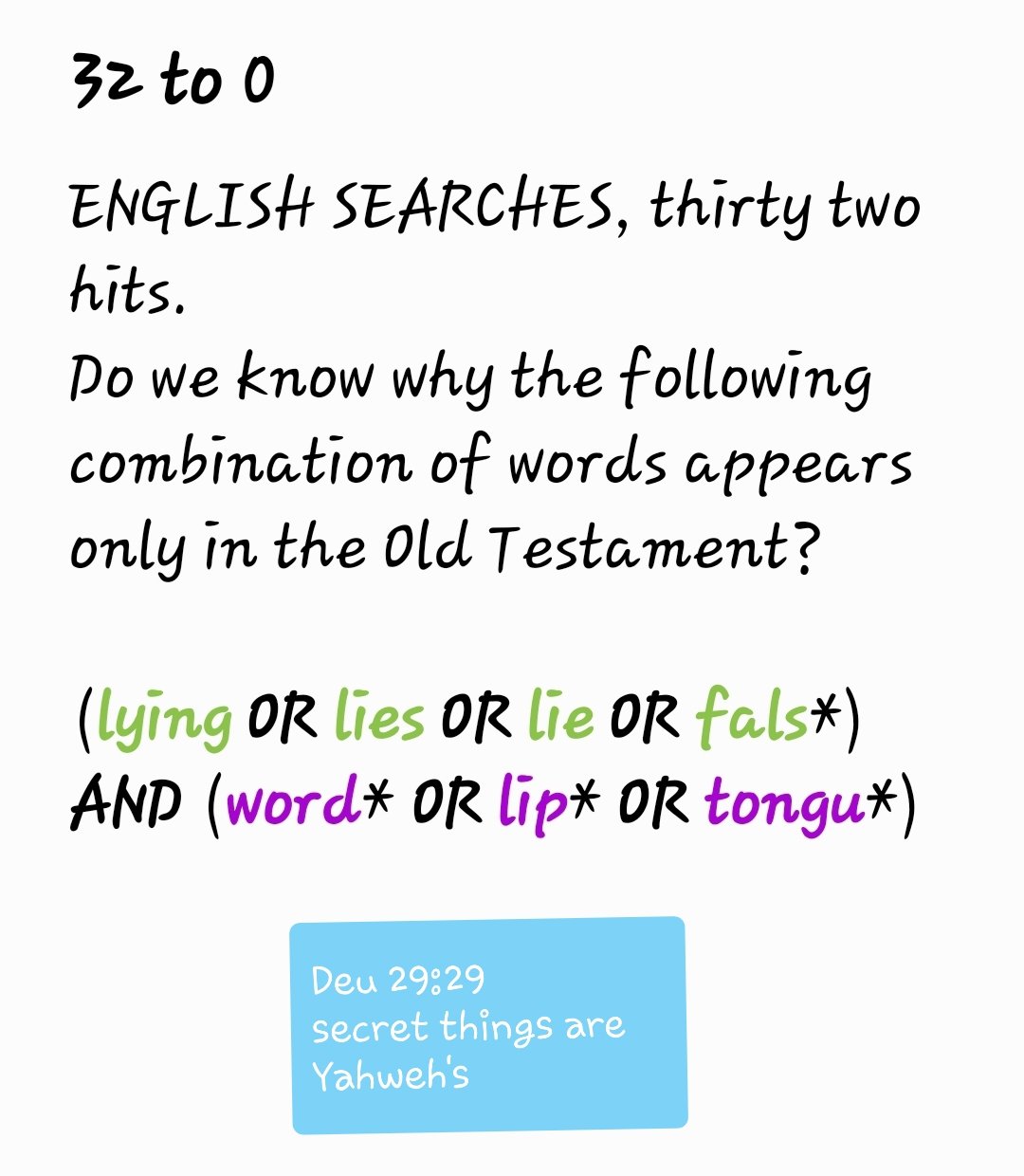
Liars die but bigots dive

In a world dulled by nepotism and xenophobia it may seem to be a wonder that no one died like Ananias and Saphira when discrimination appeared in the early church.
We have no record of investigation or culprits – it would have shrunk the membership to zero. Peter was caught up in the hypocrisy and he was the rallying point for the disciples. We should not terrify church members- people who believe – with the thought that they die when they sin.

Freed by truth

Honesty and candour are lasting character treasures but it is necessary to  evaluate the quality of the resulting freedom. It is necessary because many things are called truth: only one of them is a candidate as saving truth. One reviewing every collection of commands, decrees, and judgments, one thing is certain: it takes more than any created thing to liberate humanity. There is not even a hnt of liberation in the Ten Commandments, and there is no record of anyone being ushered into the glorious liberty of God’s elect because they have kept any covenant. The business of setting people free has never happened on account of compliance with regulations. Something unique has to be brought to bear on our bondage.

He shall send from heaven, and save me [from] the reproach of him that would swallow me up. Selah. God shall send forth his mercy and his truth.

Psalm 57:3

The doublespeak about human performance, accountability, and identity is under the miscroscope. Animals, gold and silver are not liberating elements. For an ancient Israelite there was the lasting impression that money answers to everything. Even the ancient activity of returning (shub) to covenant or Yahweh is not a lifegiving activity. Coming back to worship Yahweh after an idolatrous excursion is not the same as changing one’s mind about the status quo and believing in God for finality. The blood of animals does not affect the source of poor human judgment and behaviour. The consciences of people who were occupied with gold, silver, grain, and animal blood sacrifices remained tainted with destructive desires and rebellion. Truth that liberates does not bring one under the yokes of the past. Christ has a new yoke that does not include any anxiety such as the law introduces with its hundreds of demands. Coming to the Truth, to Christ, brings rest, liberty from death’s terror and from the owners of death’s power, guaranteed.

Do not bother saying Amen


When we cannot believe the things we hear in prayer we encourage foolishness when we say amen. God will only answer the requests that match His will anyway. Even when no one else agrees God gives, on request, good gifts. I am personally cautious about being an amen-for-amen’s-sake kind of guy.

Junky prayers show up when we ignore God’s will

  • We ask for a touch on someone’s “everything”, head to toe
  • We ask for God to heal a person’s everything
  • Then we ask God to remove every “stumblingblock”

Woe unto the world because of offences! for it must needs be that offences come; but woe to that man by whom the offence cometh!

Matthew 18:7

Then said he unto the disciples, It is impossible but that offences will come: but woe unto him, through whom they come!

Luke 17:1

No amen when prayer turns to junk

People who pray in public often show off their private practices, the theological concern of the moment, and a confusing mix of insults to a caring God and a desire dressed up like faith. Asking for a miraculous and instantaneous loss of weight may sound like a great faith venture but may also be as unlikely as a wanting to swallow a camel. We can never pray away things Christ says MUST happen, such as affliction, adversity, or stumbling blocks. Perhaps people make poor word choices when they are praying, instead of getting their words from the Holy Spirit. Offences or stumbling blocks are necessary from God’s perspective.

Hope that settles

The people who sit in the darkness can be blissfully unaware of the light that may be about to dawn, so when it does come they were not prepared for that light to be a person. They and we hoped but were not sufficiently convinced to drop everything so that their expectations can be realized.

For what is our hope, or joy, or crown of rejoicing? Are not even ye in the presence of our Lord Jesus Christ at his coming?

1 Thessalonians 2:19

There is a nakedness that attends every expectation. Our hoping is an admission of poverty in some respect. We hope for things we do not have and the lack is a condition we know will end. Hope must be allowed to settle us and be treated as part of Christ’s saving equipment.


And now, little children, abide in him; that, when he shall appear, we may have confidence, and not be ashamed before him at his coming.

1 John 2:28

Finding rest in the text – B

Continuing our conviction that coming to God’s written word is a deal that brings rest, we venture to propose that our coming and arrival includes guarding the

Protecting the mysteries

Our defence of  the faith is an important part of our rest.  This will ultimately call for us to walk in the other person’s shoes. This is a primary contributor to spiritual health. It is more than having thoughts and prayers and even having an emotional expression or deliverance insights about our neighbours in their adversity. Theology that brings us to law, Moses, Jewish types and fables as the ultimate expressionn9fnthr kin hd9mjru4dis suspect because the texts are designed to bring us to Christ, to discoveries of the substance of what the earlier witnesses saw or spoke about as yet future, not understanding but yet saved by the faith they possessed.

Real Rest

The aim of God’s intervention is to deposit divine love in human hearts.
The yoke – easy and educational – that we are invited to take on gives us real rest in the place of annual cycles of sin and death. Even when our love does not provide the relief needed for life’s situations rest is assured.  We rejoice with those rejoicing, and we mourn with the mourners. Our rest takes Messianic shape with our dynamic connection to our neighbours. Our rest is not from our hostile neighbours but from the anointed work of God.

Guarding the word and the treasure the word brings

We do theology only to the extent that we have been equipped by our pastors to do so. Instead of holding people captive to our pastoral acuity and expertise we ought to take the greatest pleasure in seeing our members advance along the lines of our own empowerment and outfitting. Currently we keep looking for problems to solve, the miracle relief, but both the written word and the personal Word of God give rest without revolving yawning.