Among the expectations that believers treasure there should be be fewer and fewer consumables. Trouble follows when our desires are fixed on things we can use up and get more of rather than on virtues that can keep growing.
The promise scapegoat
The Lord will return whether people believe it or not. The fitness of our bodies is not a contribution to or preparation for Resurrection. The people who promise things they have not experienced are hope assassins. If we have everything God wants us to have our hope resources become useless and we think we have become gods.
Having hope is not the same thing as denying what Christ has done and making every gift either temporary or conditional. People say they are saved but they’re waiting to be saved. People say they are healed but they need healing. People don’t mind being called saints but they don’t want to accept the label “holy”.
But if we hope for that we see not, then do we with patience wait for it.
It was a mild winter’s day. The day one of my sons shared a video of his family singing in church was January 26. Rain had been washing away the snow that was no longer white. Tracks in the snow showed the grass below and coronavirus had made its appearance in Toronto. It was the day after lawyers perjured themselves in the impeachment trial of the 45th president of the United States saying that he had done no wrong. It was the day Kobe Bryant died. It was a day of hidden giants.
When you start singing about your work your gravitas hits jackpot. Your profession is in high gear and no one can doubt that you are the real deal. Imagine that David never wrote a song. Imagine that Jesus never died. Imagine that your son charts a course that mirrors your life in all the ways that parents think are important and you know history is definitely being made.
Giant heroes are everywhere. They bring you untold records of life’s extremes. The joy and sadness of being a fan of life enrich us with the same sign: tears. I have always felt extraordinarily fortunate to have had a rich set of companions but few situations can rival the discovery of a first class fanclub hidden in plain sight.
The picture for me is rich. Even my native village is on a hill as if beckoning. A large portion of it receives the morning sun. There hill cities like Jerusalem and Zion, and designated hills like Ottawa’s Parliament Hill and Washington DC’s Capitol Hill and Rome’s seven hill. They cannot be hidden. There is nothing anyone can do to hide them. If not hidden, then we see them from every angle of approach.
Impossible Coverup
If we listen to the crowd we will believe that believers fail in some way that hidesgood works and robs God of glory. This is not possible. “Cannot be hidden” and “you cannot hide ” are the same. The next time you are tempted to assist someone with their light-bearing duties step away and remember that their lives are adorned and protected by a straightforward mission focus: there is no hiding. Their place on God’s chosen hill assures that there will be no hiding.
One who looks for a friend without faults will have none
-Hasidic Proverb
The number of people who end up in full surprise mode after waking up to the earth from a magical and fabulous event. A ticket to heaven was not supposed to change a person’s address. Eternal life has earthly realities that are the only ways to witness. Heaven needs neither gospel nor law.
Our friends have let us down. We all have let God down so we all need to put friendship on a foundation that avoids accusation and condemnation. This is where we discover that peace and contentment are elusive as long as we cling to performance measures and a perfect tradition.
The Book of Hebrews is a no-nonsense but softspoken arrest of the religion of Judah, the roots of which can be accurately traced to Moses and the ancestors of the Jewish people. The writer calls all of the sources “prophets” then proceeds to show these prophets as inferior and the new speaker – the Son of God – as superior and final.
Son is better than “messenger”, “servant”, “prophet”, or “angel”. (Heb. 1:4)
Salvation distinguishes these better things. (Heb. 6:9)
There is no controversy that the greater blesses the inferior. (Heb. 7:7)
Law is eclipsed by the entrance of hope. (Heb. 7:19)
The oath makes Jesus the guarantor of a better covenant. (Heb. 7:22)
Christ has a ministry and mediates a covenant that exceeds the old by being founded on better promises. (Heb. 8:6)
Better sacrifices are necessary in order to exceed the pattern for the priesthood and its services. (Heb. 9:23)
A better possession meant that bonds or the plunder of their property could be endured with grace. (Heb. 10:34)
God is not ashamed to be called the god of people who look for a better city. (Heb. 11:16)
Women who expected a better life following resurrection did not look for release from the torture they faced (Heb. 11:35)
God provides something better for all (ancient and modern people) to inherit at the same tome together. (Heb. 11:40)
Opposite Sinai is a (1) New Covenant, (2) effective mediation, (3) Jesus, (4) blood sprinkling that outdoes the function of Abel’s blood. (Heb. 12:24)
If a Jew in spite of this exposition wants to keep following Moses and the traditions of the elders and ancestors he would be most foolish, void of good judgment. What shall we say when Gentiles try to turn the business of the Son into the very business on which he came to close the door?
Perhaps “Woe” comes to mind, yet it remains for us to make every effort to stay grounded in the Son not in the ancient prophets, any prophet, any messenger or even an angel from heaven. It remains for us to work for souls to see God’s love in the Scriptures and in us and be drawn to his better things.
Life for Iranians can hardly get more complicated. A long time ago the God of the Jewish people assigned a Persian king to be his servant tasked with returning the Jewish people to the province of Judea. Today we hear today’s Persians clamouring for the smdesyruction of the Jewish state. What history are they reading? What future is there for a nation seeking the annihilation of a oercieved enemy?
When you have missed the one and only gospel you probably should not be talking about true anything. The books and videos of our traditions are a near constant stream of almost great opinions so we have no choice but to remind ourselves that the attraction of elect status, like Israel, is a fatal delusion. Faith that includes law is jail time and deadly bondage and as soon as we discover grace the handcuffs are off.
Same language different realm
Though we acknowledge that the options are distinct and the stakes are inestimable North American society is still entranced by exotic words and cultures. The fathers of the church used the language and stories of the Old Testament to say something about God that was a refreshing change from the law and the prophets.
If all we take away from reading the Old Testament is law and obedience we are vulnerable to a lifestyle of anger, futile cycles, symbols, and childish consequences. Even an experience item like the Sabbath becomes an idol instead of a gift made for humanity, especially when it is not accepted as a symbol of rest.
If all we take away from reading the New Testament is law of obedience we are very likely to have not been touched by the light or we are distancing ourselves from the gospel. Either scenario will deny us the benefits of grace. The Bible was written to awaken faith because law was not going to ever bring pardon and adoption.
Imprisoned then freed
23) But before faith came, we were kept under the law, shut up unto the faith which should afterwards be revealed. 24) Wherefore the law was our schoolmaster to bring us unto Christ, that we might be justified by faith.
Galatians 3:23-24
Law and Faith are not partners
12. And the law is not of faith: but, The man that does them shall live in them. 13. Christ has redeemed us from the curse of the law, being made a curse for us: for it is written, Cursed is every one that hangs on a tree: 14. That the blessing of Abraham might come on the Gentiles through Jesus Christ; that we might receive the promise of the Spirit through faith.
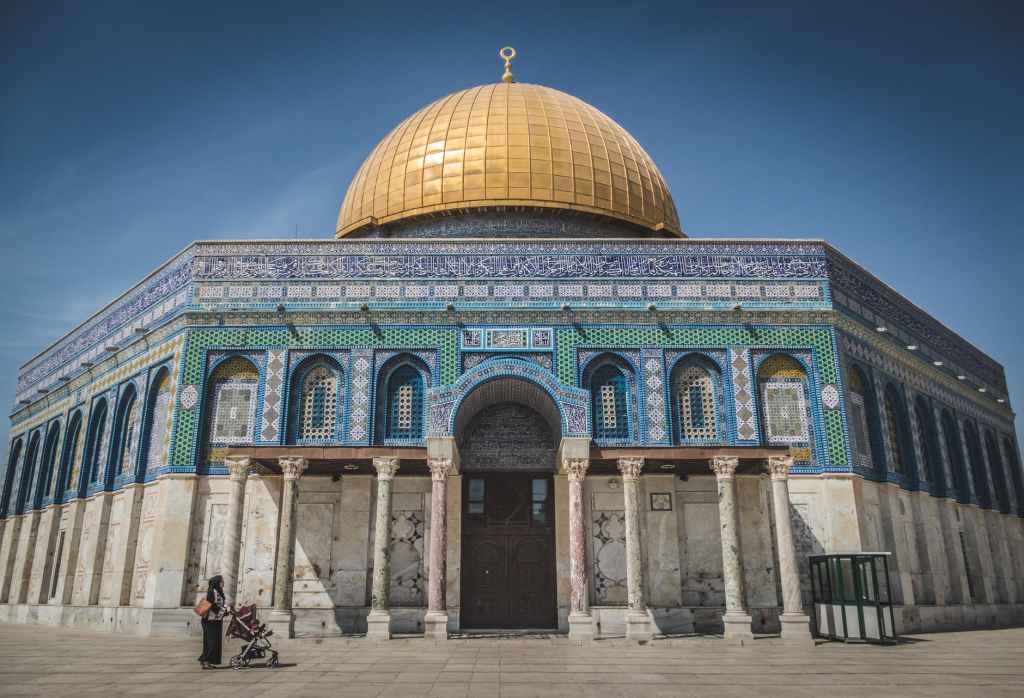
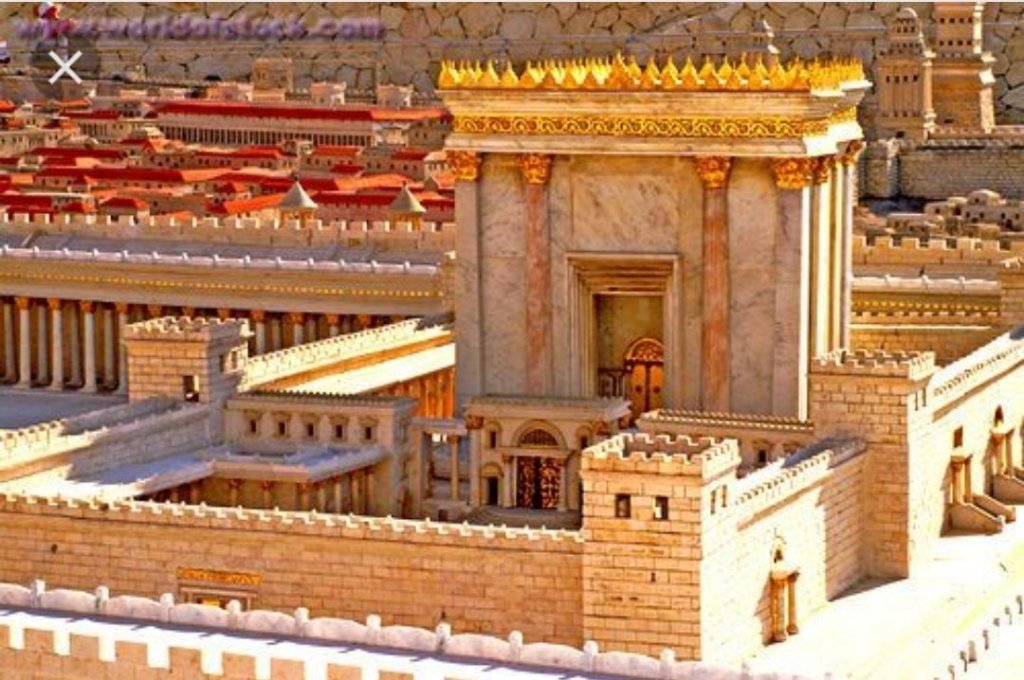
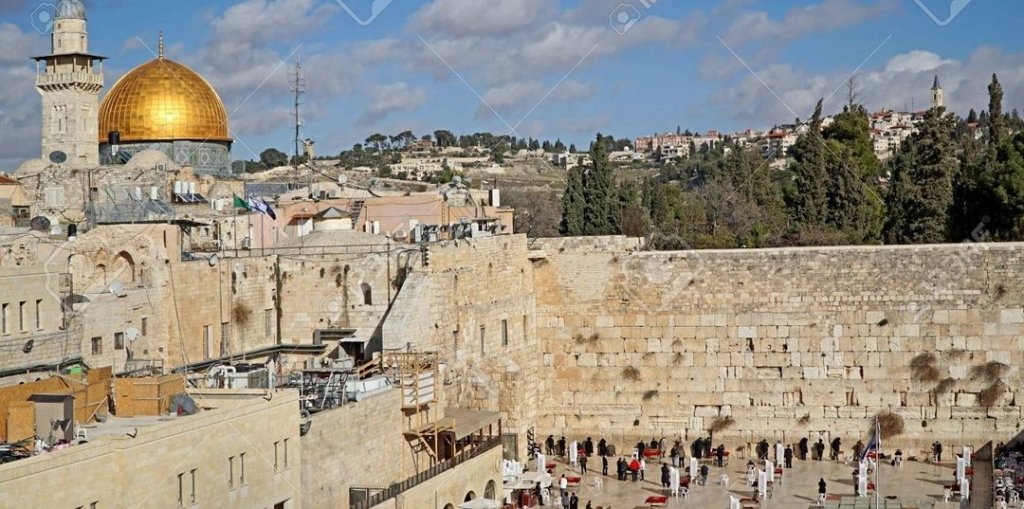
Where the Solomonic temple stood in Jerusalem stands a mosque. Is that a sign that Islam has taken over the world of religion? By no means. It is the graphic of God’s disgust with Israel and Judah. The Jewish house of prayer was twice destroyed and the meaning of such a development should not elude us.
Yahweh’s temple may have looked like this
The leader is impeachable
“For Mitch McConnell to say he’s working with the White House, coordinating with the defendant in this trial before the trial has even begun is atrocious,” said Painter during a CNN panel discussion. “He may think he’s a judge impaneling an all-white jury for a Klansman trial in Mississippi in 1965. That’s not the kind of trial we have.” (Newsweek)
The man is a walking corpse, devoid of conscience, admitting that there is no such thing as truth and that he has no interest in having the Senate examine the vast body of evidence of the criminal DNA and rap sheet of impeached potus45. Unlike the Jewish High Priests American members of Congress have no hereditary path to their offices. They all should have term limits to prevent goons like Jordan, Rep. Collins, Senator Collins and Rep.. Gaetz from stifling the next generation’s impact on the nation’s course. Let Israeli electoral doldrums be a warning to all politicians who want to be in power for life.
In the foreground, the supposed remains of the temple.
Israeli politics manipulates religious grouping and American politics thinks it can succeed with a right wing fascist agenda (with support from nominal Christians) by manipulating the Supreme Court.
Why Congress crashes
McConnell’s approach to Senate trial reminds me of the question about the authority of Christ and John the Baptist. When you cannot admit the truth say nothing.
23. And when he was come into the temple, the chief priests and the elders of the people came unto him as he was teaching, and said, By what authority doest thou these things? and who gave thee this authority? 24. And Jesus answered and said unto them, I also will ask you one thing, which if ye tell me, I in like wise will tell you by what authority I do these things. 25. The baptism of John, whence was it? from heaven, or of men? And they reasoned with themselves, saying, If we shall say, From heaven; he will say unto us, Why did ye not then believe him? 26. But if we shall say, Of men; we fear the people; for all hold John as a prophet. 27. And they answered Jesus, and said, We cannot tell. And he said unto them, Neither tell I you by what authority I do these things.
Is it not likely that the monuments and functioning buildings of US democracy will become heaps?
There is no way, except that American politics is the same as a council of the wicked, the 4th Reich, that potus45 remains in office.


 Life is Fun, But Not a Joke